Google Ads Keyword Match Types: What to Choose?

.avif)
.avif)
.avif)
.avif)
Google Ads is an indispensable tool for boosting website visibility and attracting new customers.
One of the key elements of a successful Google Ads campaign is the choice of keyword match types.
Exact match keywords, broad match and phrase match all offer distinct advantages. Understanding their differences is essential for optimizing an advertising campaign.
Exact Match Keywords, Google Ads' most precise setting
Exact match keywords are terms or phrases for which an ad appears only when the user types the exact keyword or phrase, without additions or modifications. For example, if your exact keyword is 'leather shoes,' your ad will only appear for that specific query.
Benefits:
- Maximum relevance : By targeting specific terms, you ensure that your ads precisely match what users are searching for.
- Higher conversion rate : Users performing a precise search are often further along in their buying process, which increases the likelihood of conversion.
- Better control : You have complete control over the queries that trigger your ads, which makes it easier to optimize your ad budget.
Disadvantages:
- High cost : Exact match keywords are often highly competitive, which can lead to a high cost per click (CPC).
- Limited traffic volume : By targeting only specific queries, you risk limiting your reach and missing opportunities to acquire new customers.
- Market saturation : In some highly competitive sectors, exact match keywords can be in very high demand, making it difficult to get impressions or clicks.
It's also not impossible that Google may refuse to display an ad positioned on an exact match keyword if the competition is too strong.
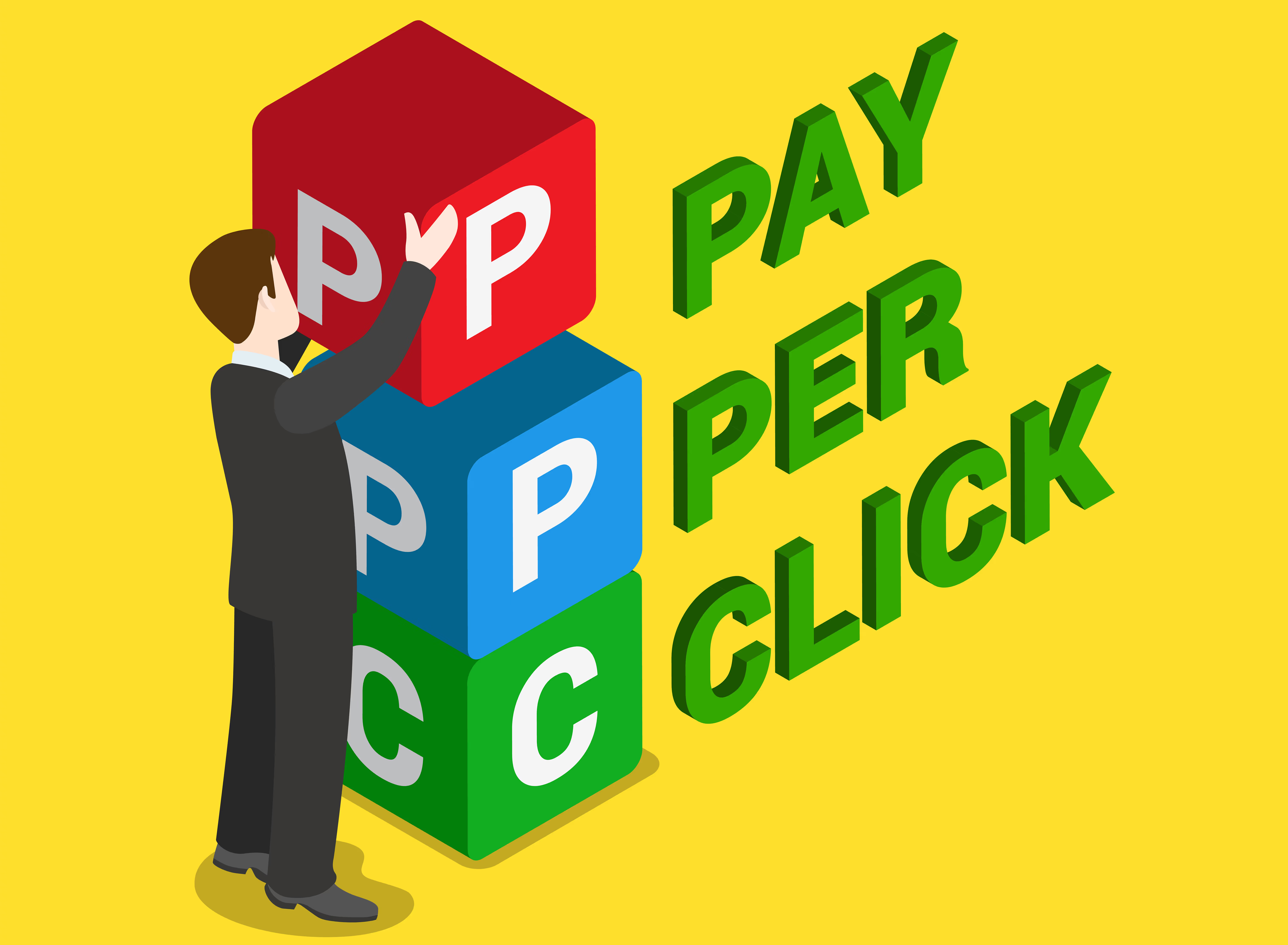
Unsure about the type of keywords to use for your campaign? Need advice on managing your ads? Afalence is here to help! Contact us today to discuss your project.
Google Ads Broad Match Keywords: Choosing a Wider Reach
Broad match allows your ads to appear for a variety of terms related to your keyword, including synonyms, misspellings, and related searches.
For example, if your keyword is "shoes," your ads might appear for searches such as sneakers, athletic shoes or buy shoes online.
Benefits:
- Increased Reach : You reach a wider audience, which can increase the total number of impressions and clicks.
- New Keyword Discovery : Displaying your ads across a more varied range of searches can help to discover high-performing keywords you might not have initially considered.
- Potentially Reduced Cost : For campaigns active over a long period, or regularly relaunched long-term, and which have therefore accumulated a significant amount of data,, it's possible to observe the emergence of a better return on investment due to a decreasing cost per click.
Drawbacks:
- Reduced relevance : Your ads are highly likely to appear for less relevant queries, consequently leading to lower click-through rates, and especially lower conversion rates.
- Unqualified Traffic : You risk attracting visitors who are not interested in your products or services, driving up advertising costs without generating sales.
- Difficult Start : For new campaigns with limited data, broad match queries can be inefficient and costly initially. For certain niche sectors, there's also a risk of a very low return on investment, due to low traffic, and consequently unqualified lead acquisition.
Exact Match Keywords on Google Ads: Balancing Precision and Reach
Exact match keywords strike a balance between the two previous categories, allowing for more precise control over your ad delivery. These ads appear when a user's query includes the exact phrase of your keyword, but also contains additional terms in the search query.
For example, the search term " leather shoes" used as an exact match also allows your ads to appear for the query "buy leather shoes", but also for "men's leather shoes", while excluding "suede shoes".
Benefits:
- Reach and Relevance : Reach users whose searches include your key phrase, while relevantly expanding your audience.
- Better Control : Target specific phrases while allowing a degree of flexibility in queries from users.
- Budget Optimization : Avoiding overly broad or overly specific queries allows for a better use of your budget : you reach a wider, yet qualified audience, thereby also enabling a better ROI.
Disadvantages:
- Ongoing Management : It is important to regularly monitor the searches your ads appear for so as to exclude irrelevant keywords and thereby avoid serving ads for inappropriate queries.
- Unqualified Conversions : Without careful monitoring of your campaign, you risk attracting unqualified leads. In return, even if your click-through rate remains high your conversion rate will be negatively impacted.
- Increased Complexity : Managing exact match phrases requires more effort in performance analysis and keyword adjustment than exact keywords or broad match phrases.
Which keyword match type should I use for my Google Ads campaign?
The three keyword match types are essential for Search Network campaigns in Google Ads, which generally offer the best return on investment.
The choice between exact match, broad match, and phrase match keywords depends on several factors, including your industry, budget, and marketing objectives.
Recommendations:
- For beginners or when in doubt, phrase match keywords are often the best starting point. They offer a good balance between reaching a wide audience and ad relevance.
- Exact match keywords are ideal if you want to target very specific queries and are willing to invest more for a potentially higher conversion rate.
- Broad match keywords can be useful in the long term, especially if you have accumulated enough data to optimize your campaigns. They are also suitable if you are looking to significantly increase your visibility.
It is, therefore, essential to balance strategies: combining the three match types helps maximize the reach of your ads while maintaining the relevance of the audience discovering them.
Regular monitoring of your keyword performance and adjusting your strategy based on the results you obtain is important, regardless of the match type(s) used in your campaigns.
In particular, make sure to exclude search terms generating unqualified traffic to better optimize your budget utilization, thereby generating a better return on investment.

Afalence, your preferred partner for managing your keyword match types and Google Ads campaigns
The choice between exact match keywords, broad match, and phrase match is crucial for the success of your Google Ads campaigns. However, the parameters that go into making good decisions about which keyword strategy to apply are often complex.
In addition to this, you must regularly monitor your campaign's settings, as well as the search terms used to display your ads, two time-consuming activities that are essential for effective budget management and directly impact your return on investment.
The need for specialized assistance to navigate the complexity of Google Ads and maximize the ROI of your campaigns may then become apparent, and that's where Afalence can help you.
Our digital marketing expertise and the expertise gained from successful campaigns across a variety of sectors will enable us to guide you to the best keyword strategy for your campaign and optimize your ads to achieve your goals.

See also our other articles
Discutons de vos besoins
Vous cherchez une agence de confiance pour votre projet ? Contactez-nous et découvrez comment nous pouvons vous aider