Visual Identity Design: Key Steps to Building a Strong and Coherent Brand

.avif)
.avif)
.avif)
.avif)
Creating a visual identity isn't just about choosing a logo or attractive colors. It's a foundational effort, at the intersection of brand strategy, graphic design, and user experience.
A well-crafted visual identity allows a company to be immediately recognizable, credible, and consistent across all its communication channels.
A brand's visual identity encompasses all the graphic elements that allow it to be identified and differentiated : logo, color palette, typography, graphic guidelines, and adaptations for digital and print media.
When thoughtfully developed, it becomes a true lever for differentiation and memorability.
Creating a visual identity is a strategic step
Visual identity is the first point of contact between a brand and its audience. Even before reading a message or understanding an offer, the user perceives a universe, a tone, a positioning.
An effective visual identity notably helps to:
- Enhance brand recall ,
- Build trust,
- Clearly stand out from the competition,
- Ensure consistency across all platforms (website, social media, print, presentations, etc.).
Without a clear framework, design choices become arbitrary, inconsistent, and difficult to adapt over time.

Key steps to creating a successful visual identity
Step 1: Define the brand's DNA and positioning
Every strong visual identity begins with strategic work. It's essential to identify the brand's values, mission, and personality, as well as its target audience and competitive positioning. These elements serve as a compass for all future graphic design decisions.
Step 2: Formalize a clear creative brief
The brief translates strategy into visual intentions. It specifies the objectives, constraints, desired tone, relevant media, and potential references. A well-structured brief avoids unnecessary back-and-forth and ensures a consistent direction.
Step 3: Analyze the market's visual landscape
Observing competitors and industry codes helps understand what is expected, but also what to avoid. The goal is not to reproduce, but to intelligently differentiate while remaining legible to your target audience.
Step 4: Build a consistent and accessible color palette
Colors play a major emotional role. They should be chosen based on the brand's positioning, as well as their legibility and use across different media. A well-designed palette incorporates primary, secondary, neutral, and accent colors, while adhering to accessibility principles.
Step 5: Select appropriate typefaces
Typography strongly influences a brand's perception. It must reflect its character (institutional, modern, premium, accessible, etc.) while ensuring excellent readability. Generally, a simple, well-executed combination is more effective than stacking fonts.
Are you launching a brand or considering a visual identity redesign? A strategic framework to establish your brand guidelines upfront helps avoid costly mistakes and premature redesigns.
Step 6: Design a functional and durable logo
The logo is a central element, but it should be conceived as part of a whole. It must function in different contexts, sizes, and colors, while remaining identifiable. A good logo is simple, consistent with the visual identity, and designed to last.
Common mistake: thinking about the logo before the strategy
A logo designed without clear positioning risks being aesthetic but ineffective. An effective visual identity is always the result of prior strategic work, never the other way around.
Step 7: Applying the identity to key materials
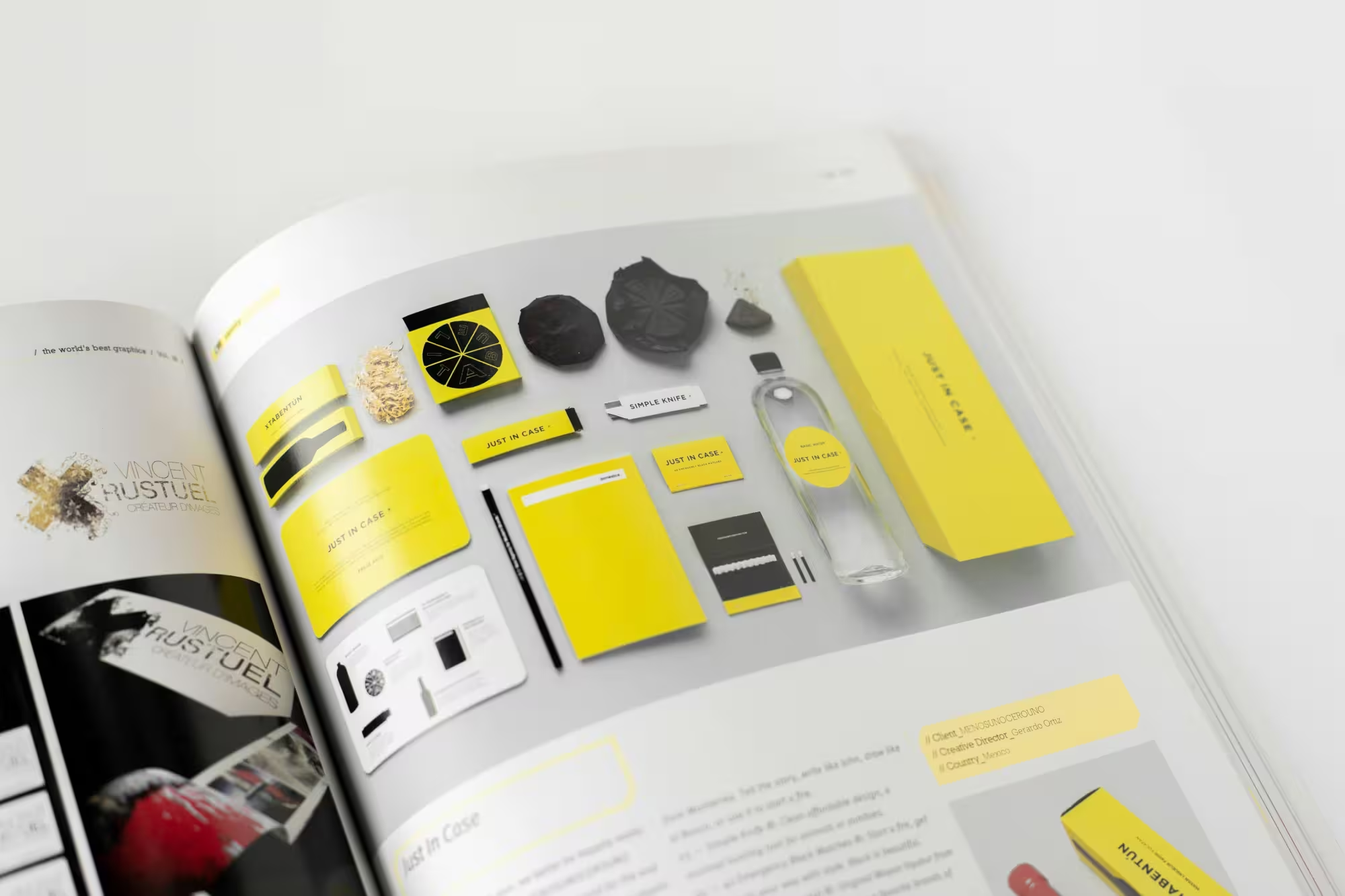
A visual identity only comes to life when it's deployed. Website, social media, commercial documents, printed materials: each touchpoint must adhere to the same visual rules to strengthen brand recognition.
Step 8: Formalizing everything in brand guidelines
The brand guidelines bring together all the rules for using the visual identity. It ensures consistency over time, even when multiple stakeholders are working on the brand. It's an essential tool for safeguarding the company's image.
Why hire a professional to create your visual identity?
Creating an effective visual identity requires both a strategic vision, a graphic expertise and a deep understanding of digital practices. Hiring a specialized agency helps avoid arbitrary decisions, visual inconsistencies, and premature redesigns.
Afalence supports you in designing a strong visual identity, aligned with your business objectives and designed for effective deployment across your web and communication channels.
Contact us today to schedule a meeting and collaboratively define your brand's visual identity.

See also our other articles
Discutons de vos besoins
Vous cherchez une agence de confiance pour votre projet ? Contactez-nous et découvrez comment nous pouvons vous aider