What are the benefits of a no-code website compared to a coded website?

.avif)
.avif)
.avif)
.avif)
The evolution of the digital world now offers new effective methods for creating websites without needing to learn programming or coding languages.
No-code has thus become a highly popular alternative, especially for those looking for a quick, efficient, and economical solution to create their online storefront. In this article, we will explore the advantages of no-code platforms compared to traditional web development approaches.
1. Ease of Use and Quick Setup
a. Intuitive Onboarding:
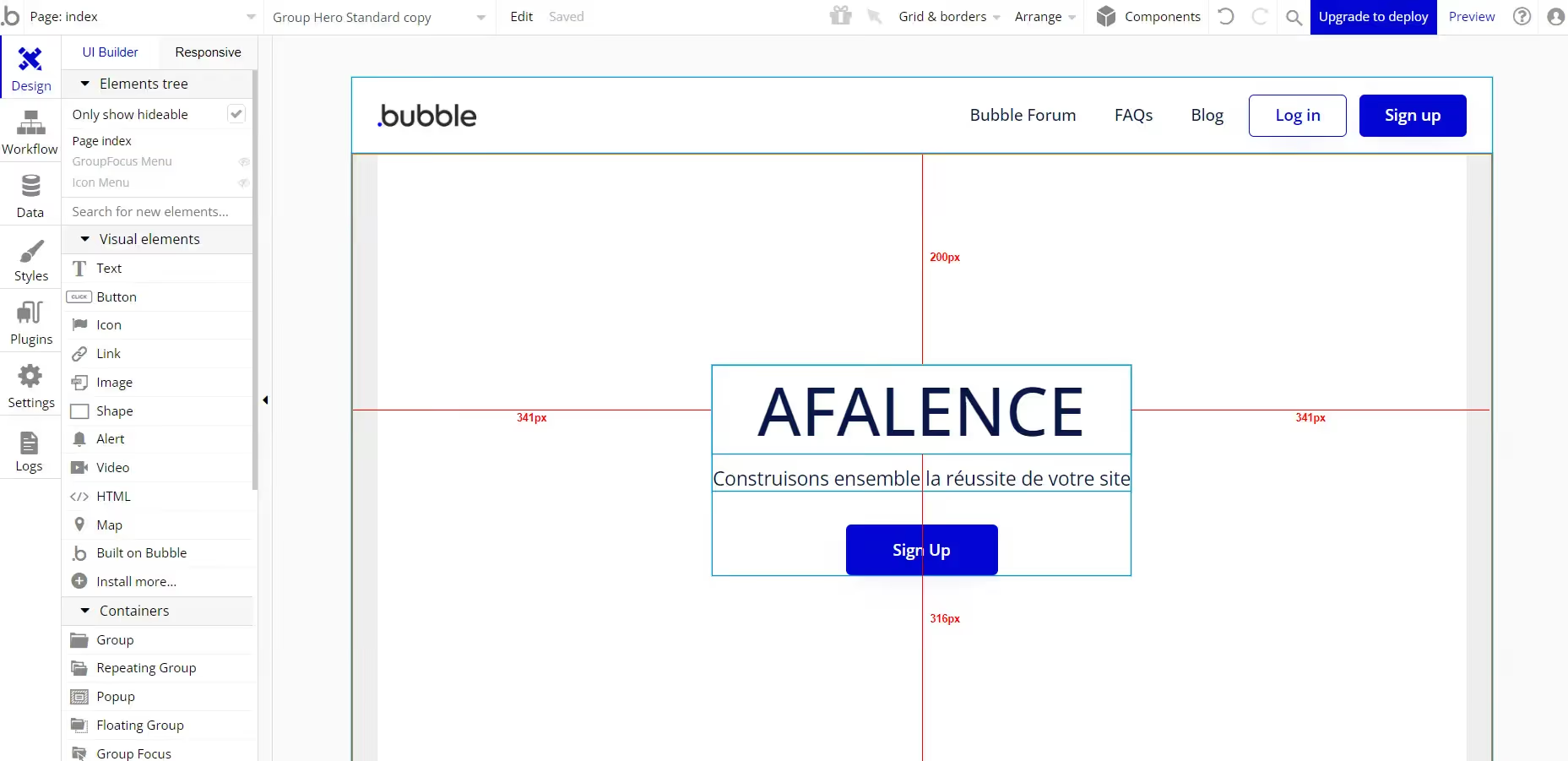
No-code platforms are designed to be user-friendly. Even if you have no programming knowledge, you can create a functional website using drag-and-drop interfaces.
Everything is visual, which greatly simplifies the creation process.
Depending on the platform used, many features, such as buttons, contact forms, or login areas, are configurable in just a few clicks.
This visual control also helps limit the risk of bugs caused by programming errors.
b. Time Savings:
Rather than spending weeks, or even months, coding a website from scratch, no-code platforms allow you to launch a site in just a few days.
Many platforms offer predefined templates that further accelerate the process by starting from an existing base.
Using a template also ensures a properly "responsive" site, meaning it displays correctly regardless of screen size (desktop and mobile).
This aspect is increasingly crucial because mobile browsing is now as important as desktop browsing. Google therefore favors sites that are properly navigable on mobile, and your online visibility will be significantly impacted if your site is not "responsive."
2. Reduced Costs and Flexibility
a. Development Savings:
Hiring a developer or a development team can be expensive. With a no-code solution, you can significantly reduce these initial costs.
Indeed, thanks to the fluidity and efficiency of no-code platforms, development will require less time. This difference in hours worked will be reflected in your project's invoice.
A no-code website will therefore be more competitive while offering similar quality.
The webmastering (maintenance and optimization) of your site will also be much less expensive because it's simplified by using a no-code solution. For minor changes, you can also manage your content yourself, unlike a coded website which will inevitably require your webmaster's intervention.
b. Simplified Maintenance:
No-code platforms are regularly updated by their providers to ensure security and performance. This means fewer worries for you regarding updates and troubleshooting.
However, be cautious with older platforms or those that rely on community-created "plugins". When the main software is updated, some elements may no longer be compatible and require technical intervention.
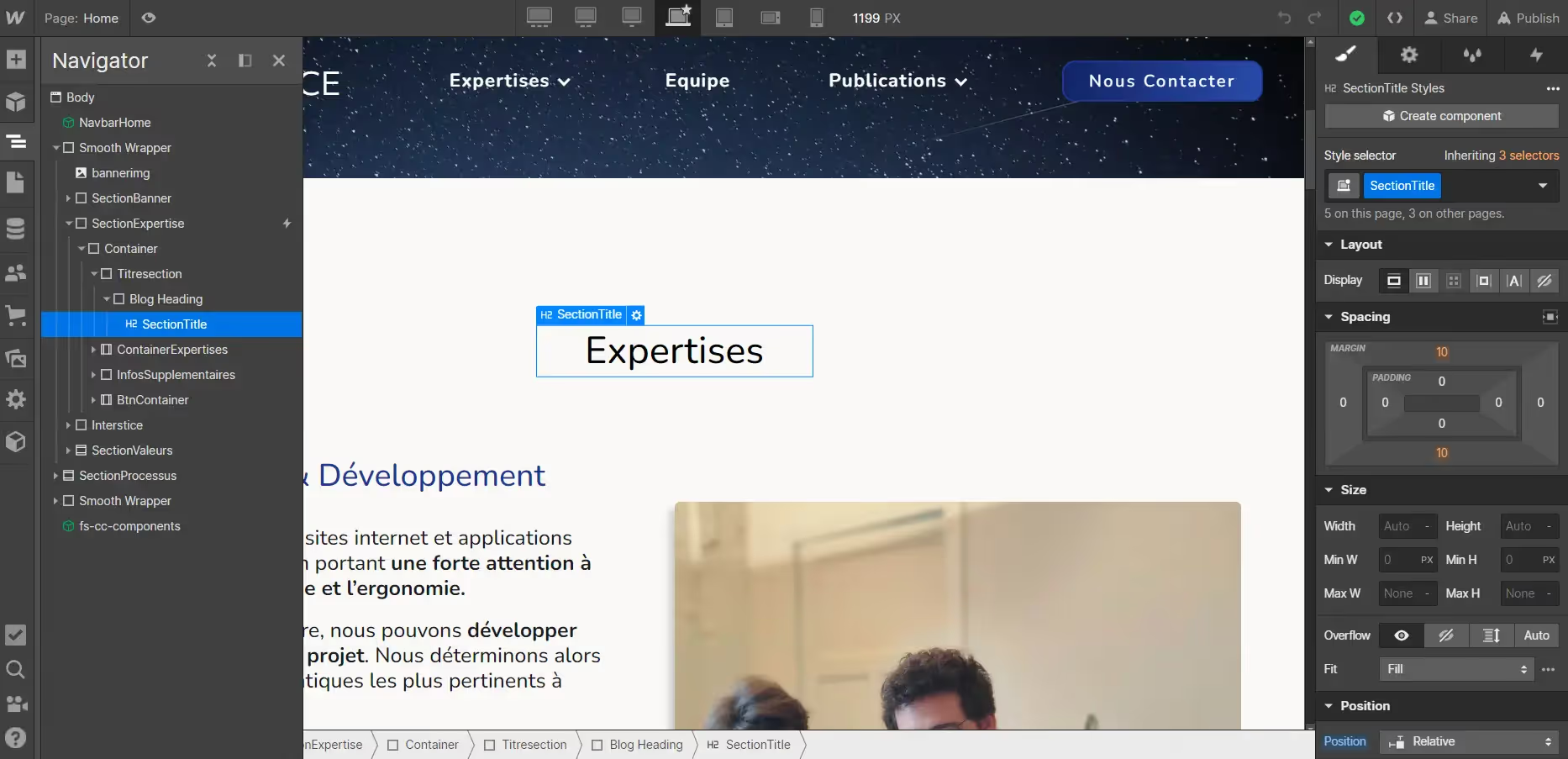
More modern and comprehensive solutions like Webflow allows for monitoring with reduced maintenance thanks to updates that don't conflict with your site's operation.
For more information on the benefits of Webflow and how it works, we invite you to read our full overview of Webflow.
c. Scalability:
Many of these platforms offer options to add additional features (e.g., an online store, a blog, etc.) without having to rebuild everything.
When you work with an agency on your project, it's important to have a long-term vision for your site. This allows for laying the foundation for future features, which can accelerate their development and thus reduce their creation cost.
3. Adaptability to Diverse Needs
a. Variety of Templates:
Whether you want a showcase website, a blog, a portfolio, or an online store, no-code platforms offer a variety of options to meet your needs. Different platforms each offer advantages depending on the type of site you want to create.
For creating an e-commerce site, using Shopify allows you to directly integrate an admin interface to manage your sales and track your inventory. For creating a personalized and custom showcase website to offer a unique experience to your prospects, Webflow will be more suitable thanks to its extensive creative freedom.
For more information on the different platforms available and how they work, we invite you to check out our top 10 best no-code platforms.
b. Customization:
Even without coding, some platforms offer advanced customization to ensure your site perfectly matches your brand image. Indeed, standard no-code sites are based on a template, which can limit their degree of customization.
However, there are no-code platforms, like Webflow, that have turned this limitation into a strength by offering the ability to create no-code sites from a blank canvas, providing the development team with complete creative freedom.
Custom navigation allows you to create a unique browsing experience for your users, converting them more effectively.
c. Integrations:
No-code solutions often integrate easily with other tools, such as booking systems, payment platforms, social media, etc. Furthermore, many automation tools like Make or Zapier allow you to create workflows between your various no-code applications.
By linking your Webflow site with your Hubspot customer database, these tools can automate the creation of a lead profile and the sending of automatic emails. This great integration flexibility allows you to automate many tasks, enabling you to focus on your core business.
If you want to learn more about no-code automation tools, we invite you to check out our article on Make, the no-code automation app.

Conclusion
Thanks to the improvement of modern platforms, no-code websites are now excellent alternatives to traditional websites. The features offered and their flexible use allow for similar results to be achieved while significantly reducing the resources required.
Their ease of use gives you control over your website, allowing you to modify or add content yourself.
If you'd like to explore other no-code solutions, you can check out our article on the best no-code apps in 2024.

See also our other articles
Discutons de vos besoins
Vous cherchez une agence de confiance pour votre projet ? Contactez-nous et découvrez comment nous pouvons vous aider